TATETRAILS
YEAR
2025/02
Role
Strategy Designer
Category
Service design/Product design
DESIGN AT
Royal College of Art
TEAM
5 people


2-3 weeks
Insights
User interview
User journey
Trend analysis
Observation
Questionnaire
2-3 weeks
System design
Trend analysis
Observation
Strategy
2-3 weeks
Delivery
User interview
Questionnaire
Trend analysis
Observation
Rearch
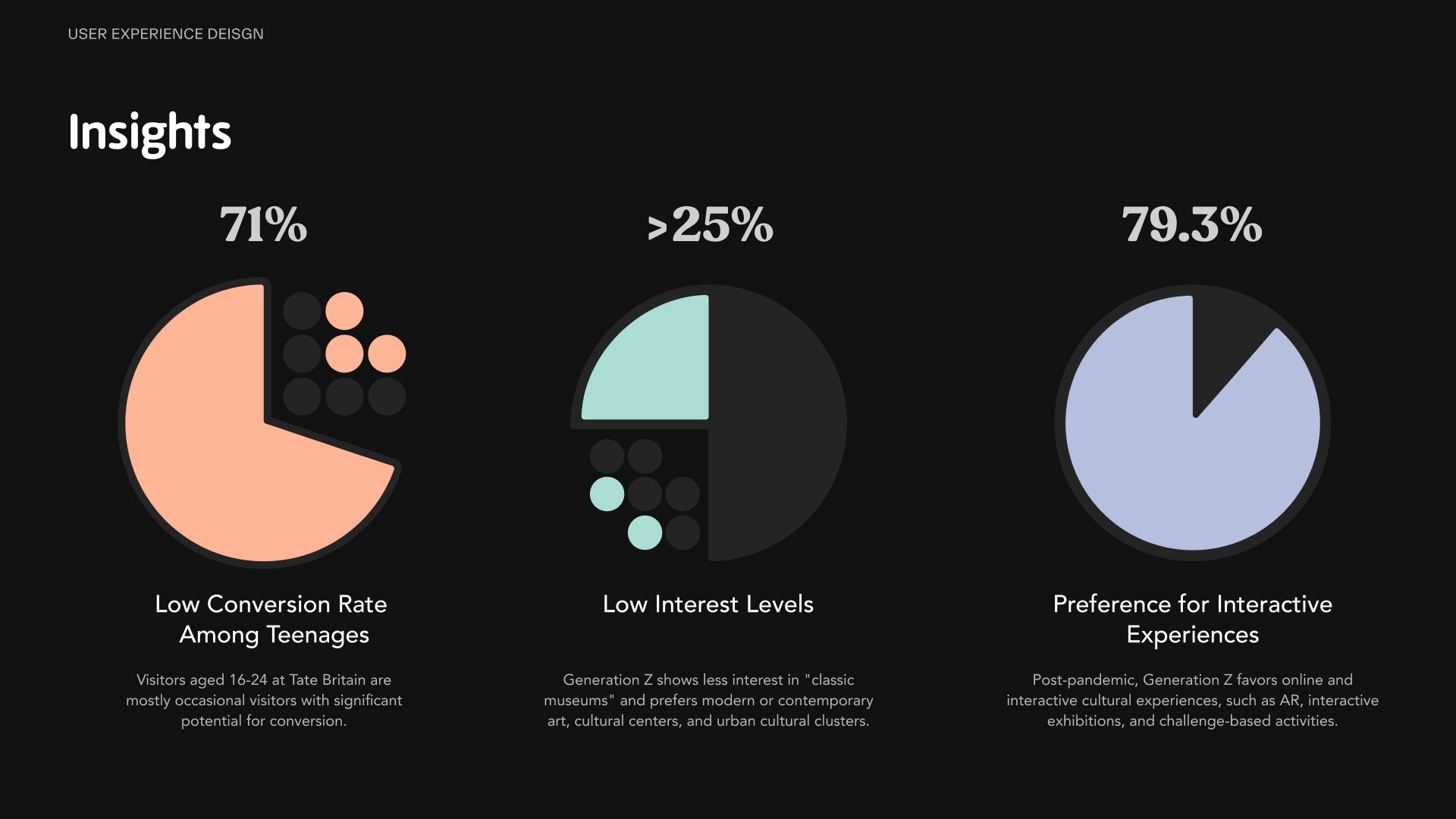
Young audiences at Tate show low habitual engagement and limited interest in traditional exhibitions, but demonstrate a strong preference for interactive, participatory experiences—indicating a clear need to redesign museum experiences toward engagement-driven formats.
How might we turn complex art experiences into intuitive, playful interactions that Gen Z can easily engage with and emotionally connect to?
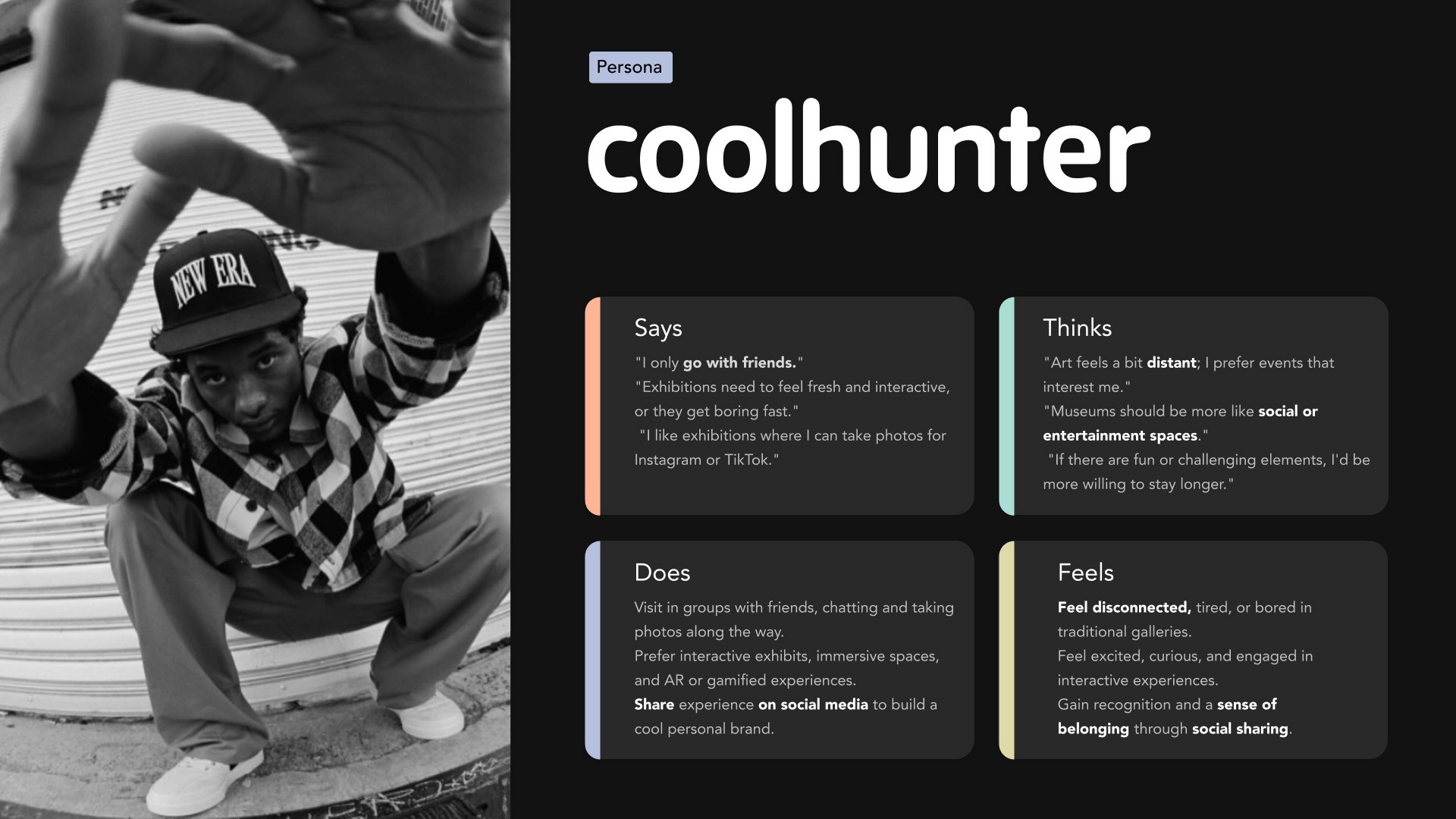
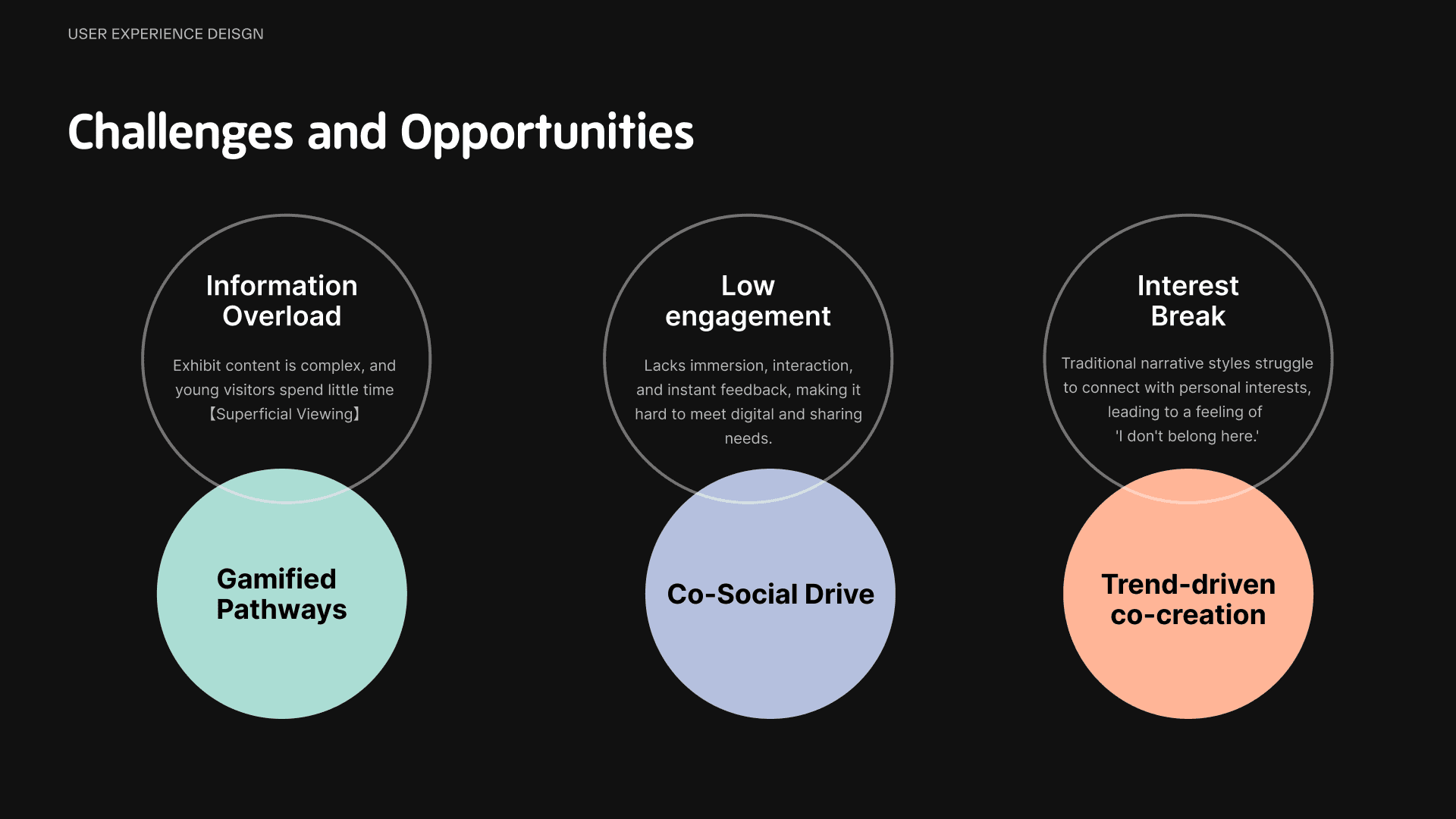
Based on our insights into the Coolhunter user group, we have identified key problems and developed three core design strategies: Social Drive, Gamified Browsing Journey, and Trend-driven Co-creation.
Through these three strategies, we aim to create a more immersive, interactive, and engaging content browsing experience for young users, enabling them to move beyond being passive information receivers and become active participants in content creation.
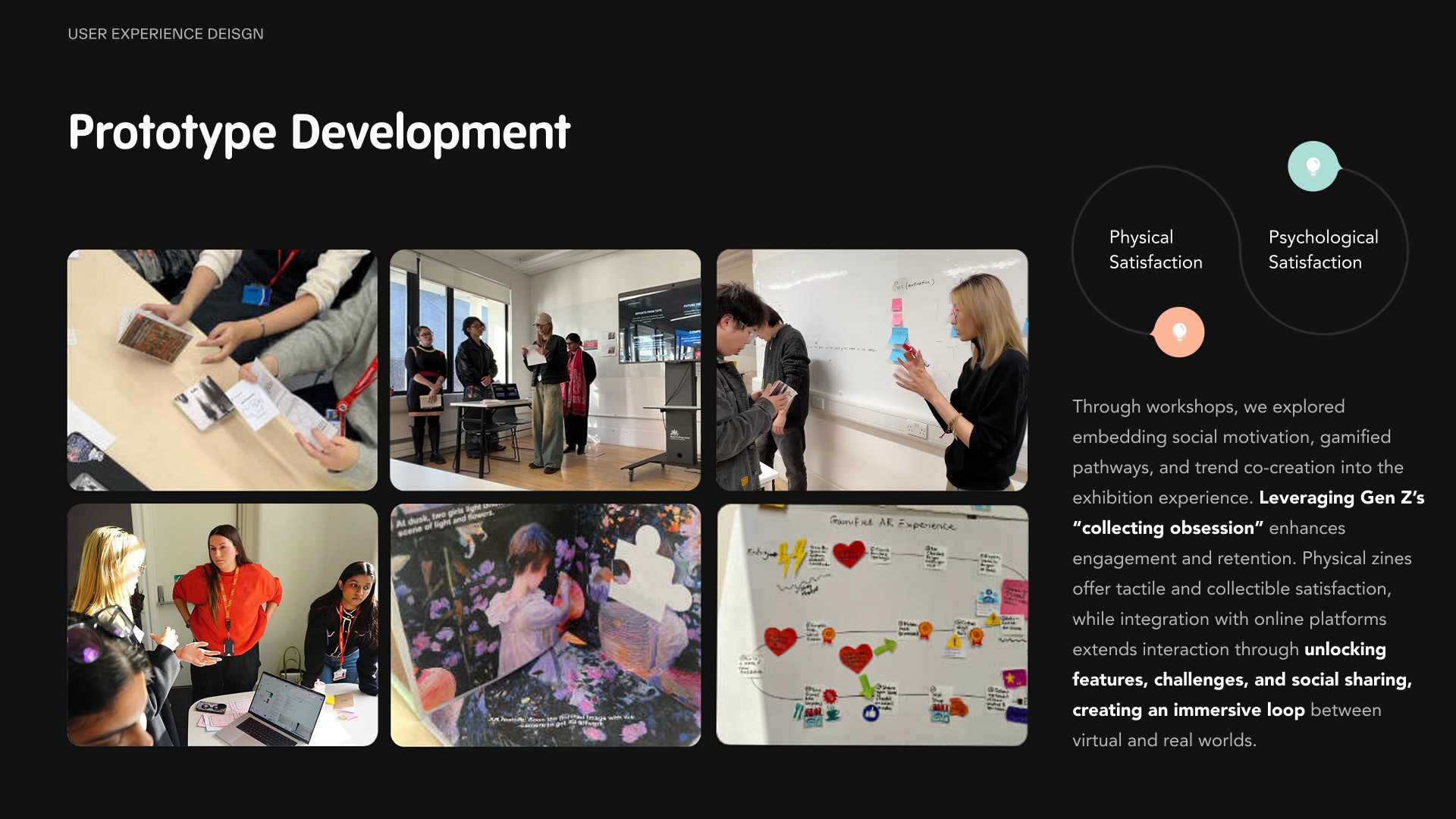
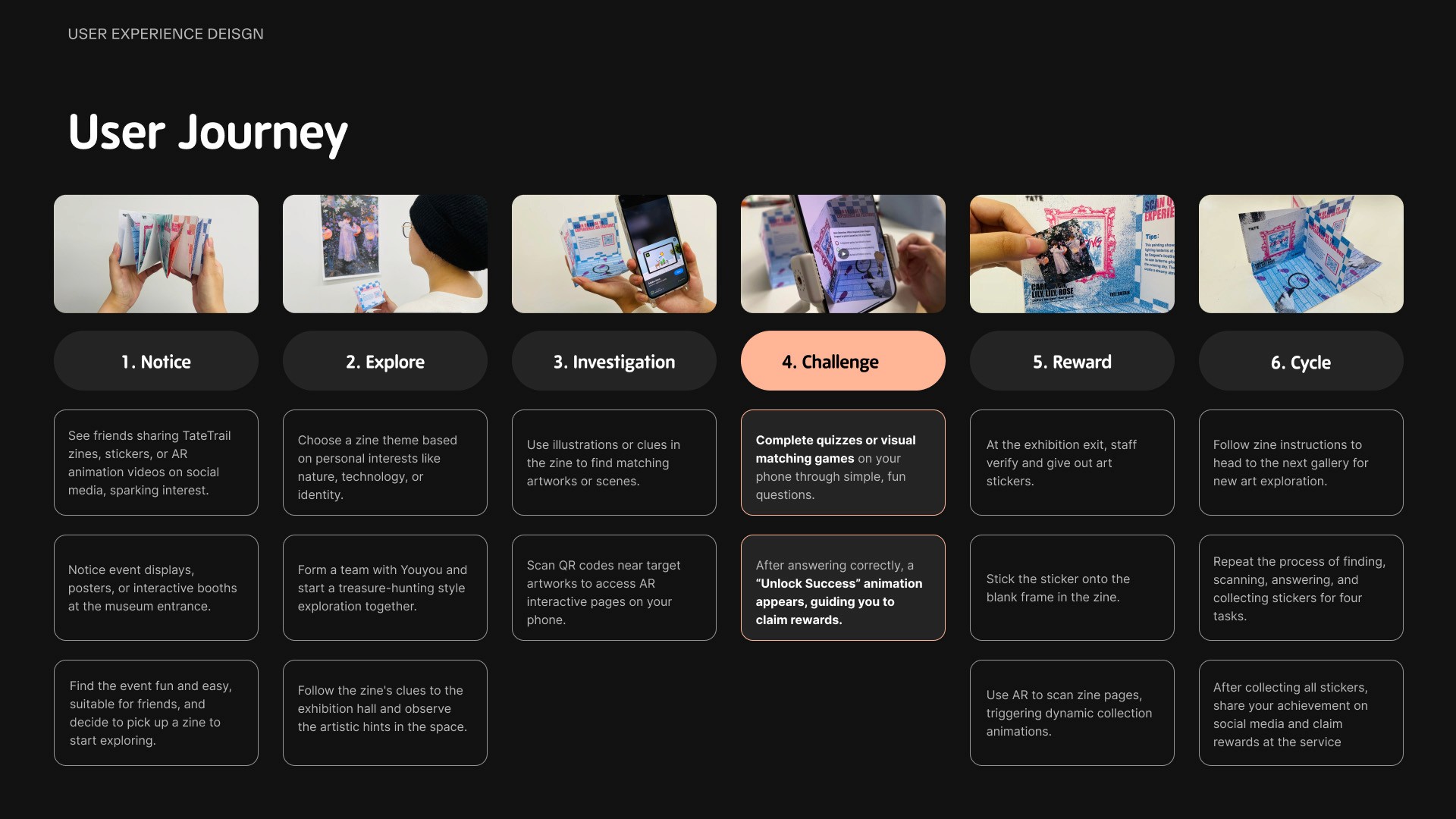
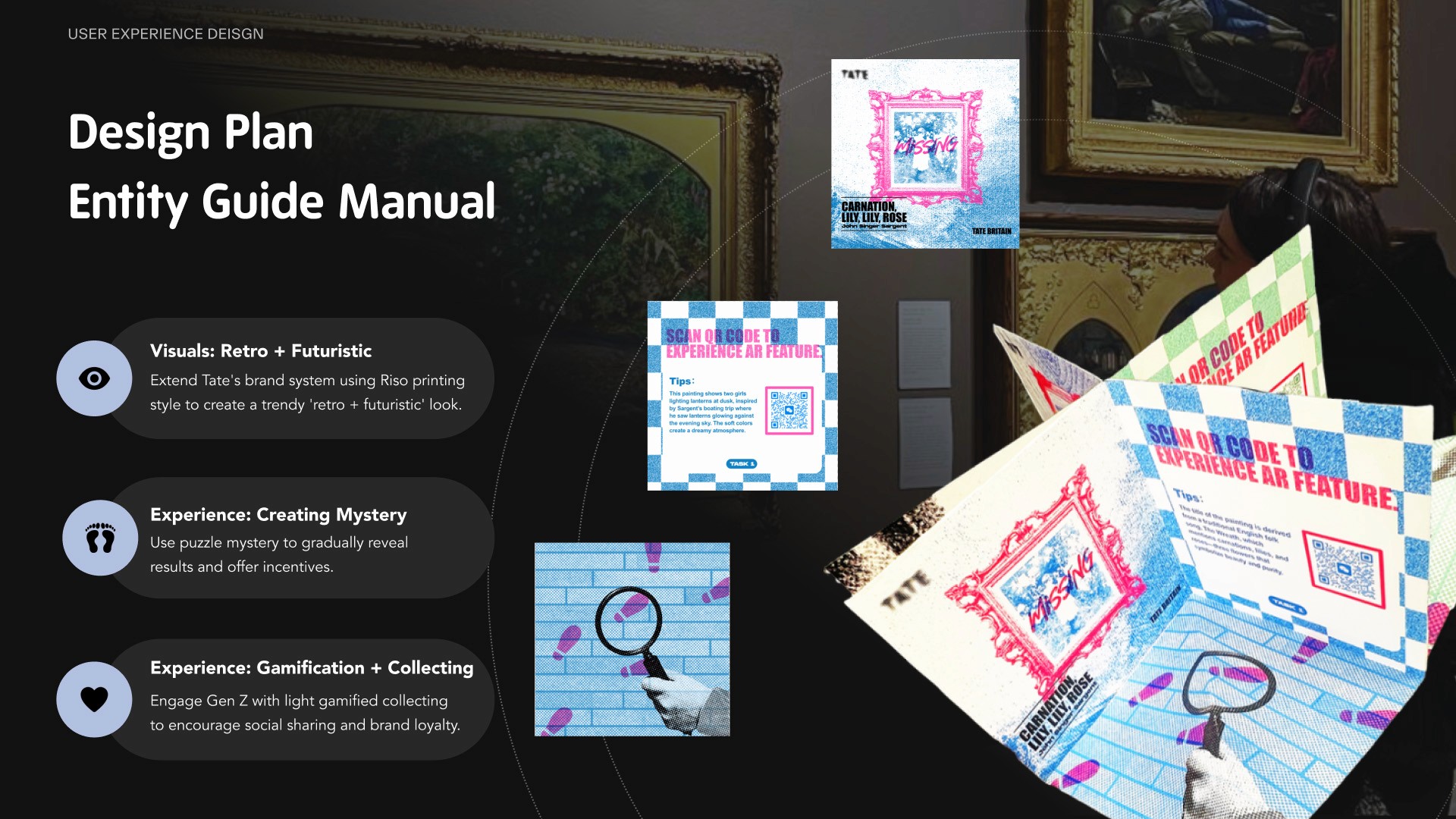
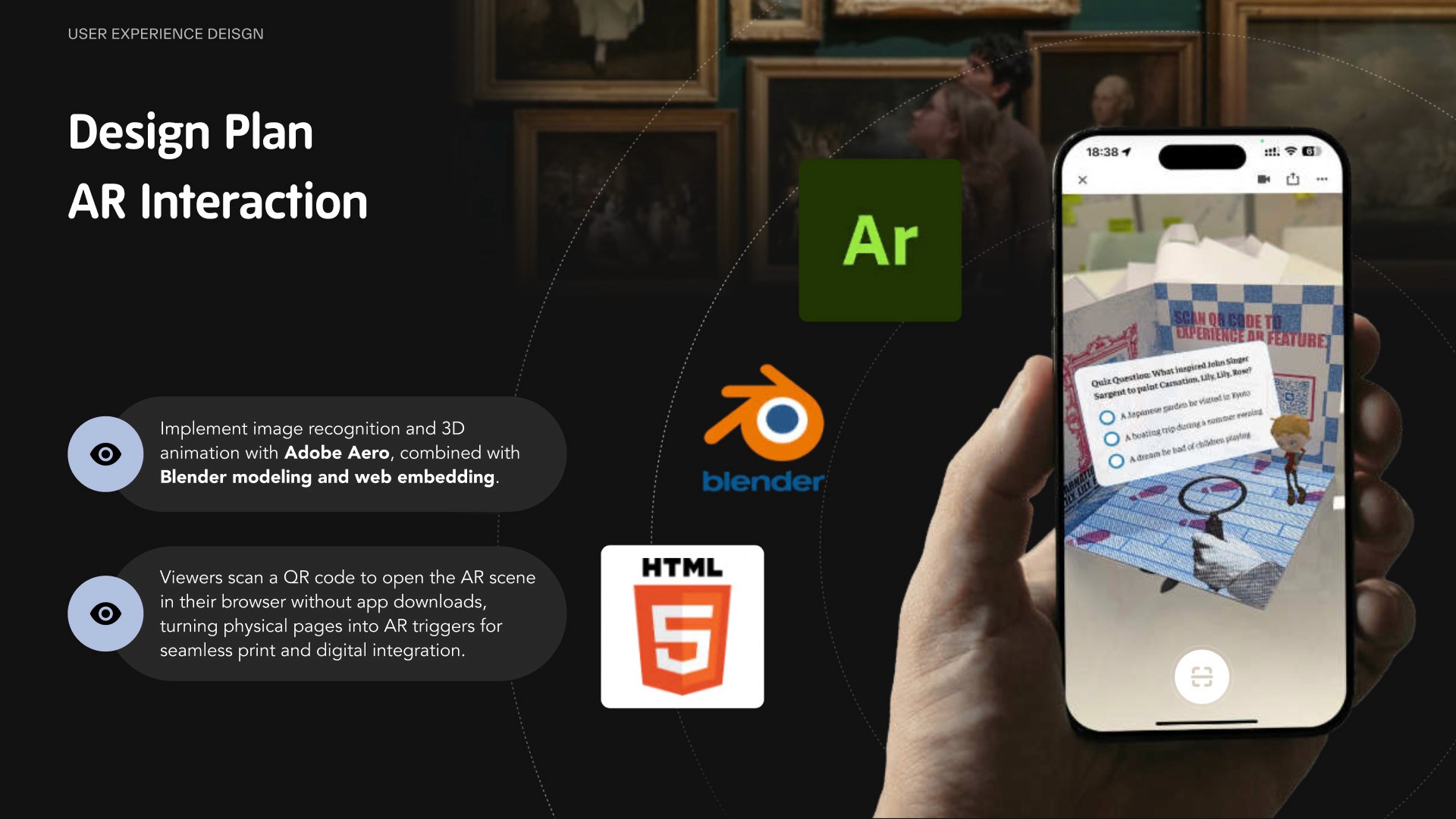
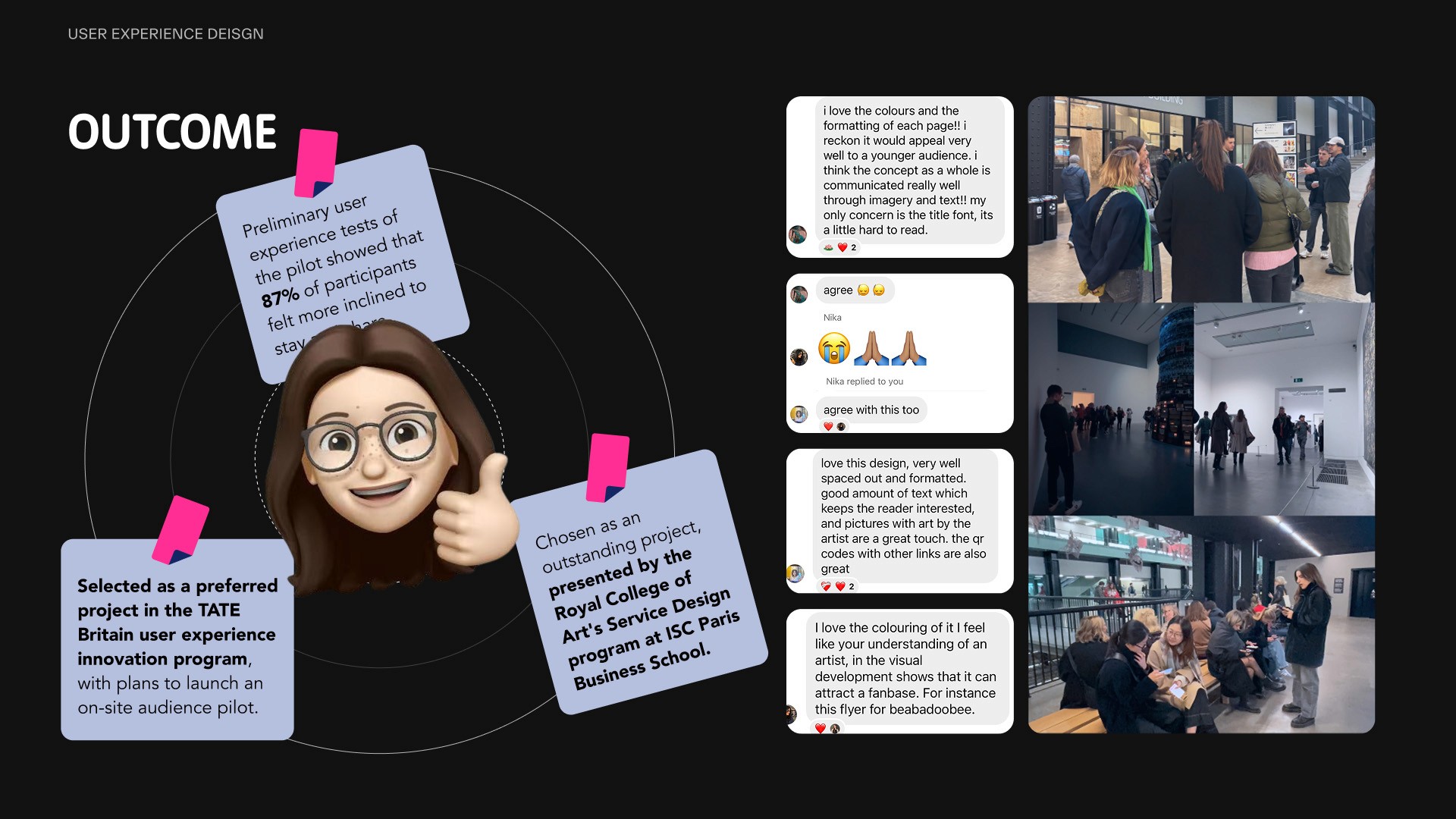
The pilot user experience testing showed strong positive engagement, with 87% of participants reporting increased willingness to stay longer and share their experience.
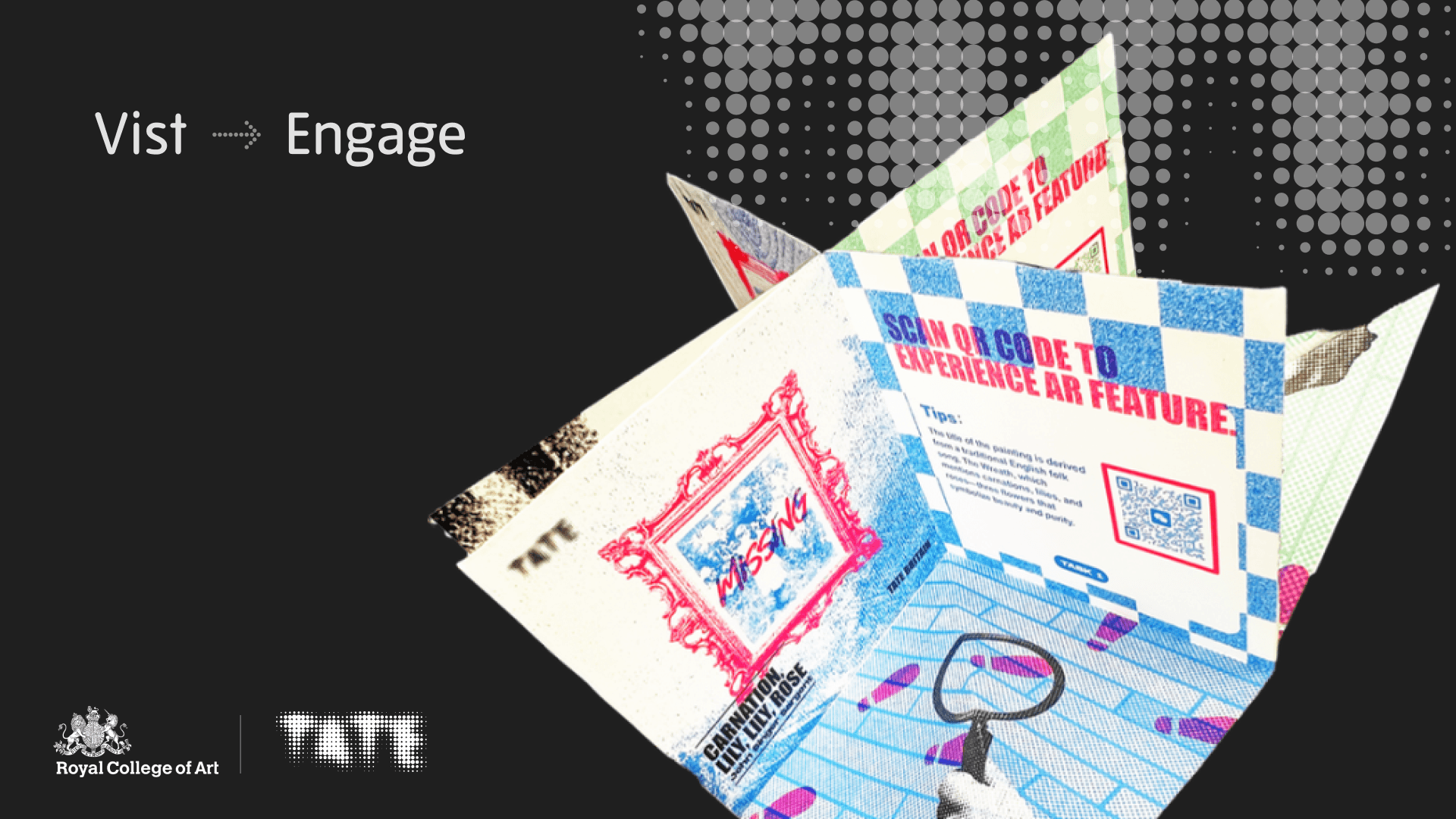
TateTrail Zine was selected as a preferred project in the Tate Britain User Experience Innovation Programme, with plans for an on-site audience pilot.
The project was also recognized as an outstanding work from the Royal College of Art Service Design programme, and was presented at ISC Paris Business School.
Result and reflection
This project was less about designing an artifact, and more about developing a way of thinking—learning how to operate within uncertainty, fragmentation, and scale.
One of the key shifts in my thinking was understanding that data itself is not valuable; value emerges from identifying gaps within it. I began to ask not “what do users do,” but “what is missing between what exists and what is possible?” This reframing allowed me to move from surface-level insights to structural opportunities—where behavioral tension becomes a design entry point.
A second critical challenge was defining who the design is actually for within a seemingly homogeneous “Gen Z” category. Rather than treating this as a demographic, I began to understand it as a spectrum of behavioral logics. The introduction of the “coolhunter” segment from Tate’s prior research was pivotal—it revealed that effective design does not start from invention, but from recognizing latent behavioral clusters that already exist but are not yet design-expressed. This shifted my understanding of design from audience creation to audience precision.
The co-creation process also fundamentally reshaped my design thinking. At the beginning, we were anchored in a digital-first assumption, exploring a mobile-based interactive navigation system. However, through dialogue with Tate stakeholders, I realized that complexity is often mistaken for value. The decision to abandon a high-tech direction in favor of a zine-based system was not a simplification, but a strategic repositioning of constraint as clarity. It forced me to confront a key principle: the highest-value solution is not the most advanced one, but the most contextually precise one.
Iteration became another layer of thinking evolution. Across three co-creation cycles, I observed that each prototype did not simply improve, but reframed what the problem actually was. The shift from a puzzle-based system to a quiz-and-reward mechanism was not a design refinement, but a conceptual correction—from passive completion to active engagement. This helped me understand that in service design, form is never neutral; it encodes assumptions about behavior.
Ultimately, this project redefined my understanding of design practice itself. It is not about producing solutions, but about continuously negotiating between constraints, behaviors, and meaning systems. The role of the designer, in this sense, is not to finalize ideas, but to engineer the conditions under which better ideas can emerge.