RESILIENCE OF BLUES MUSIC

A project to revive Ealing’s blues heritage through community collaboration and playful, cross-generational experiences.

YEAR

2025/02

Role

Designer

Category

Service design/Product design

DESIGN AT

Royal College of Art

TEAM

5 people
RCA’ S Grand challenge

The Grand Challenge 2024-2025 focuses on helping local communities in London develop resilient systems to tackle pressing global issues, such as climate change, health, pollution, and socio-economic challenges. The goal is to design systems capable of adapting to and recovering from these challenges, ensuring sustainability and preparedness for future crises. 

I worked in interdisciplinary teams from across the School of Design, each assigned to a London borough. We were tasked with identifying key local risks, engaging with the community, and applying design resilience strategies such as co-design, systems thinking, and data-driven solutions. The project covers areas like waste management, energy, urban sustainability, and climate adaptation, aiming to create human-centered, flexible solutions that promote community resilience.

My role


  • Lead overall project planning and direction in collaboration with Hengsong Zhang, Ziwei Fu, and Jialu Sheng.

  • Following the completion of the Grand project, I initiated and organized an extended team to further develop and implement the concept in real contexts.

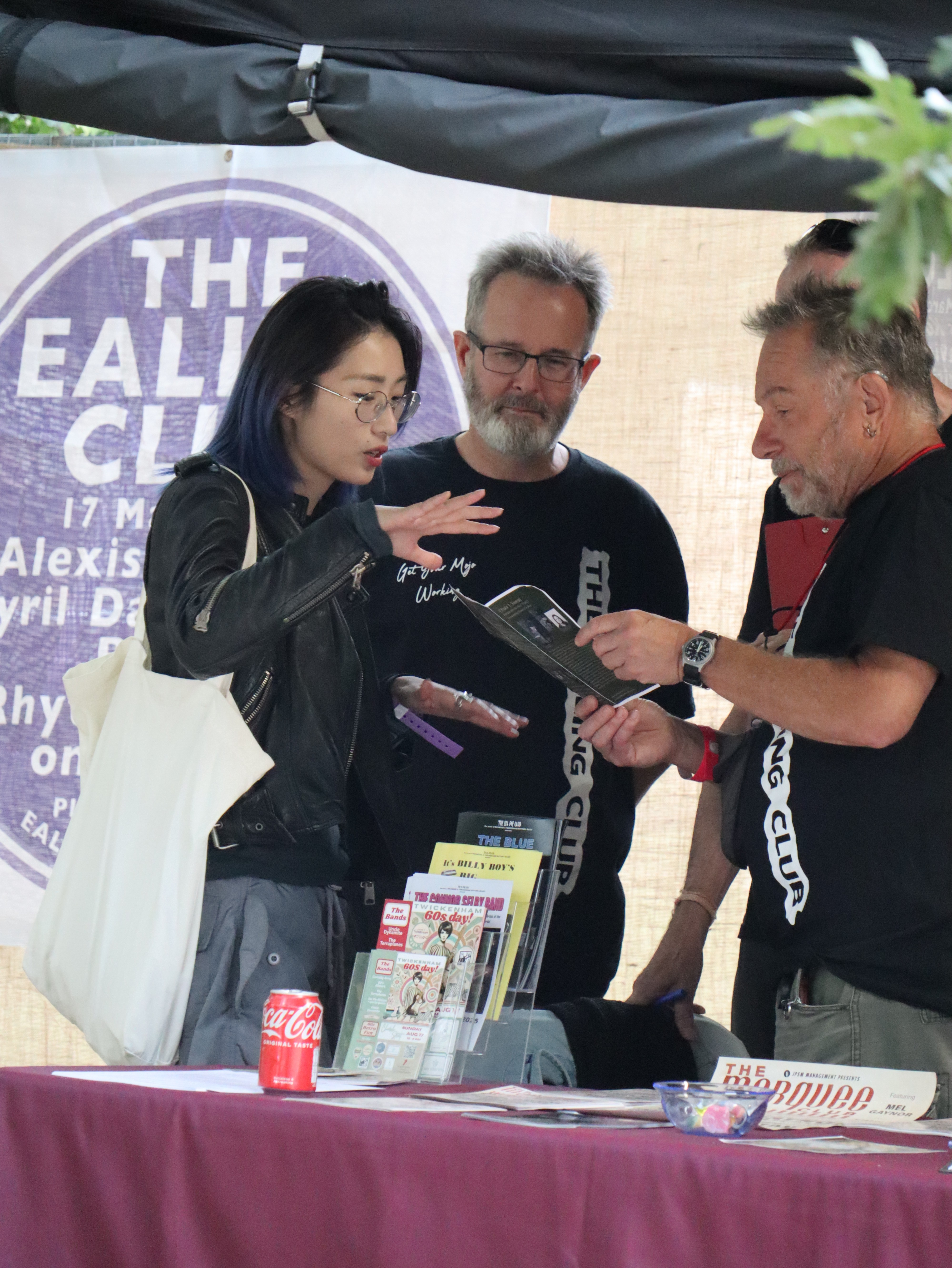
  • Worked closely with Ealing Council, local community leaders, and The Ealing Blues Club to build partnerships and successfully advance the project toward real-world impact.

Outcome

Stage 1 — Community Activation

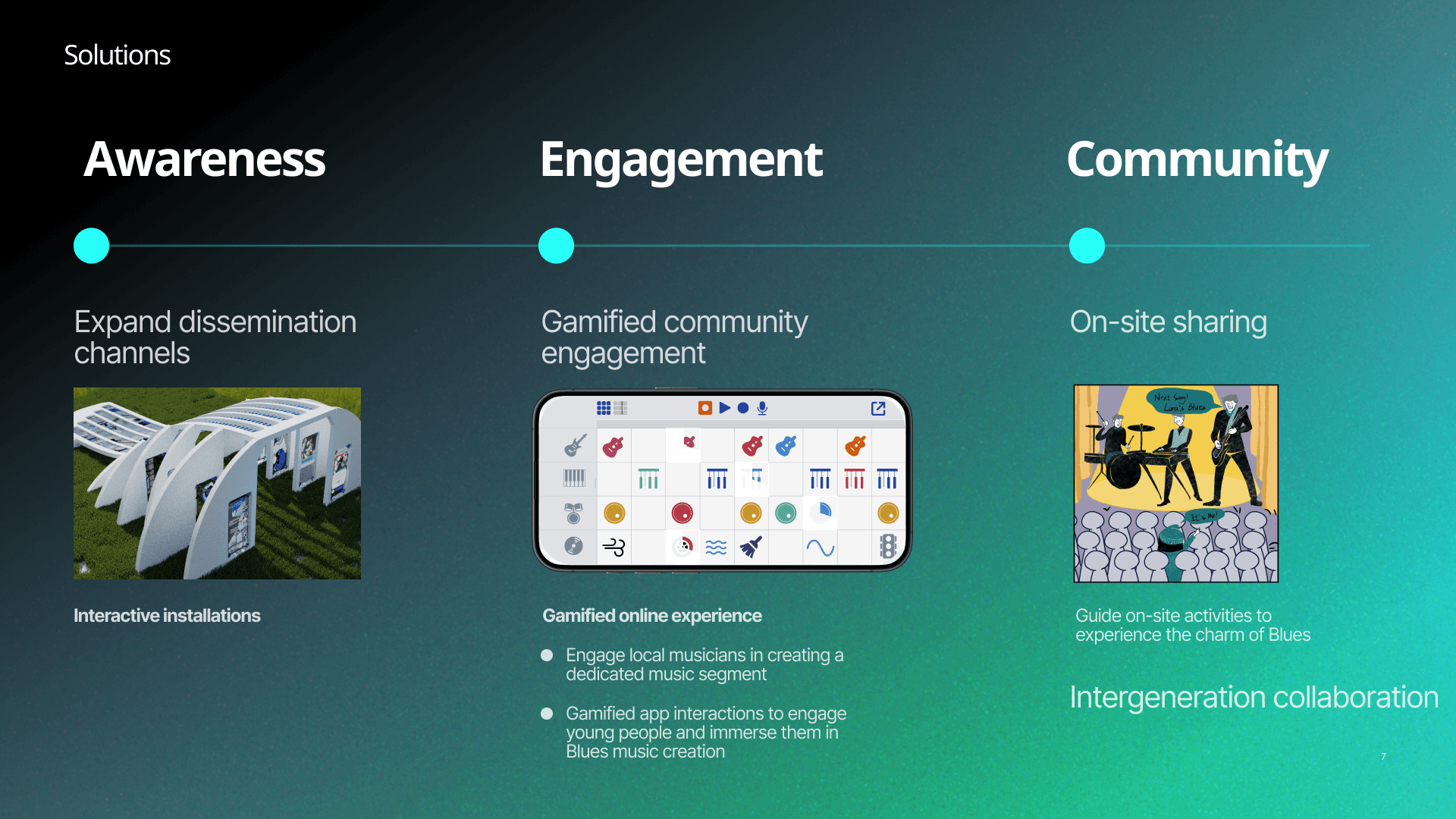
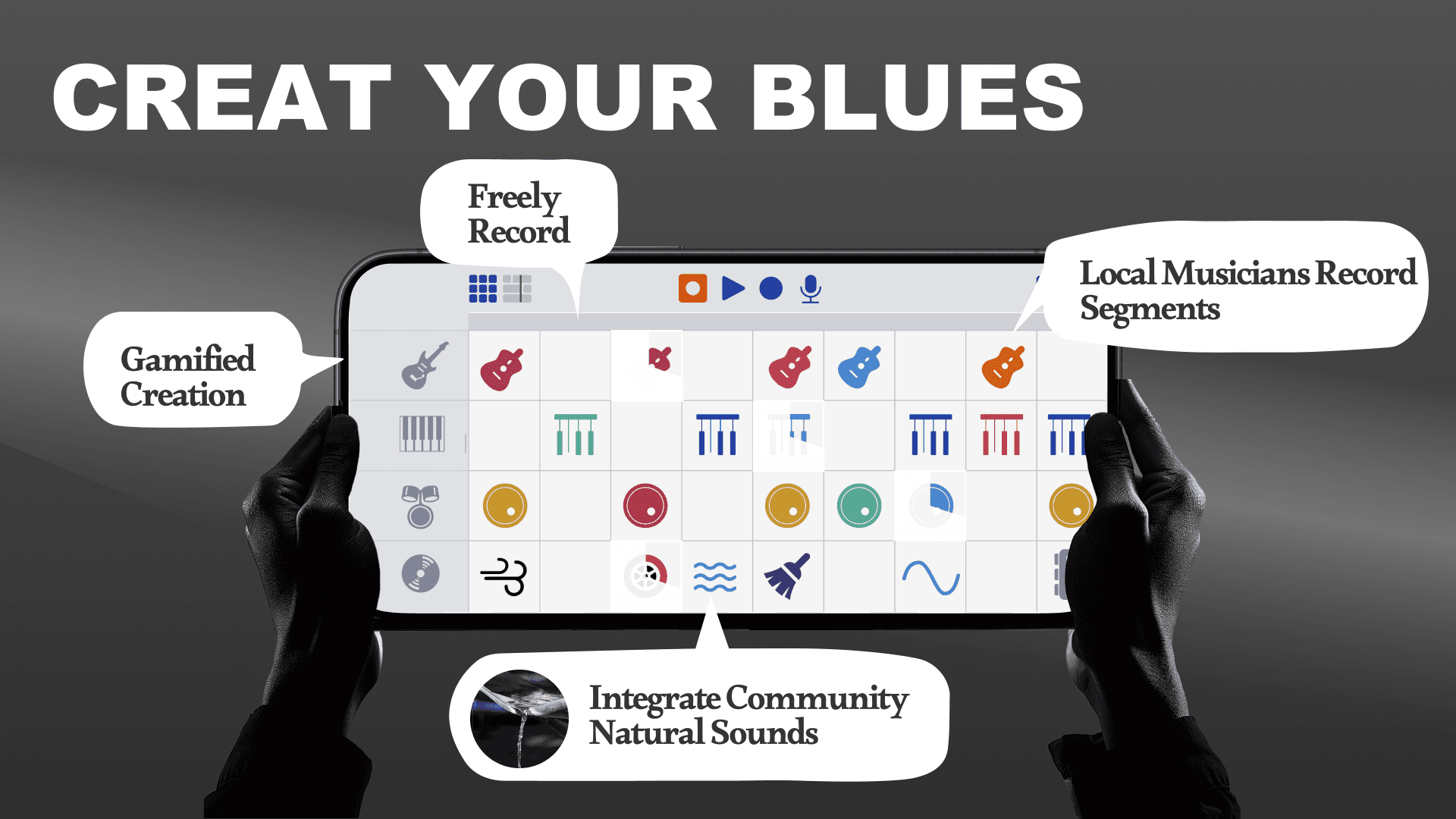
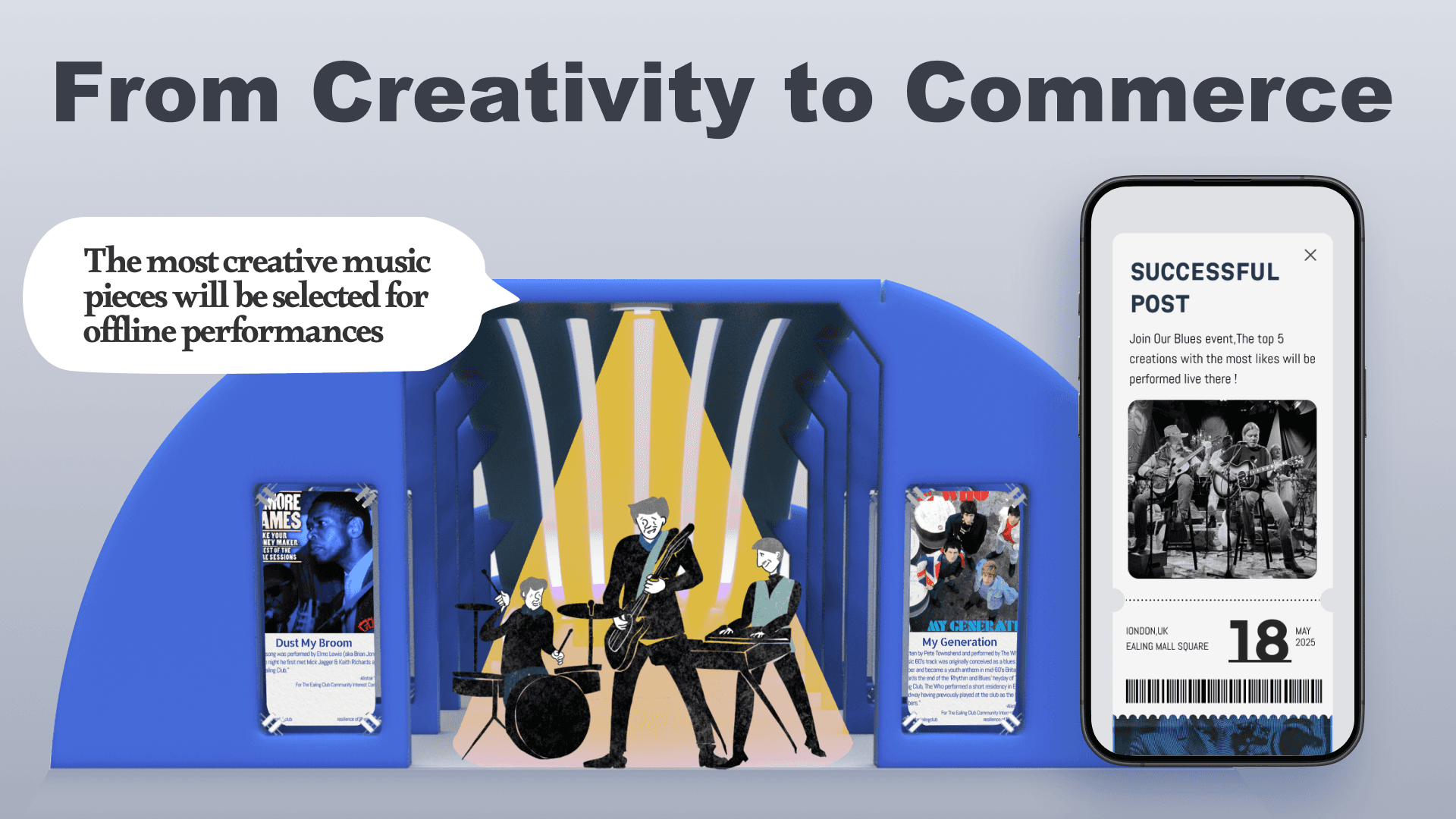
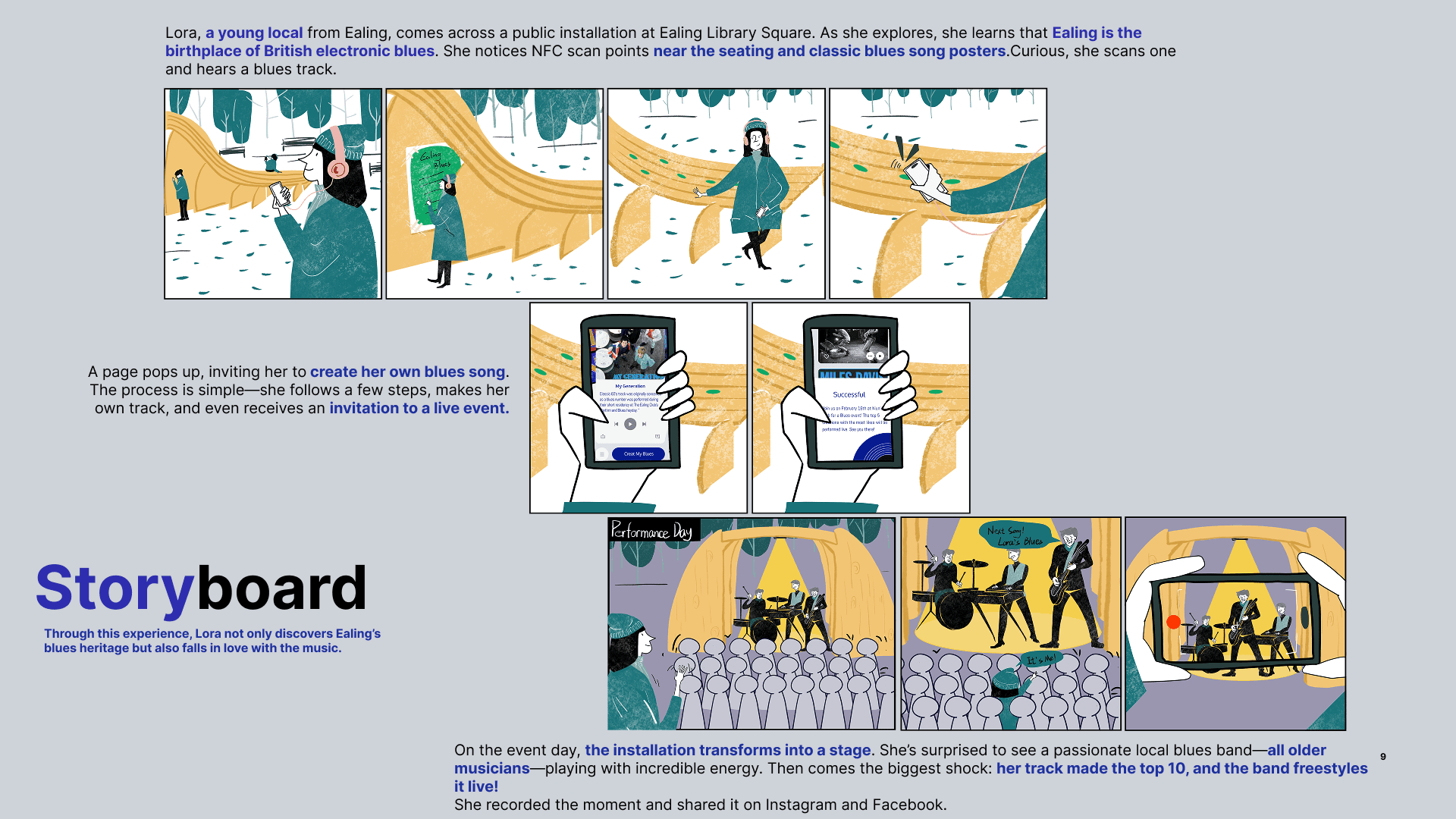
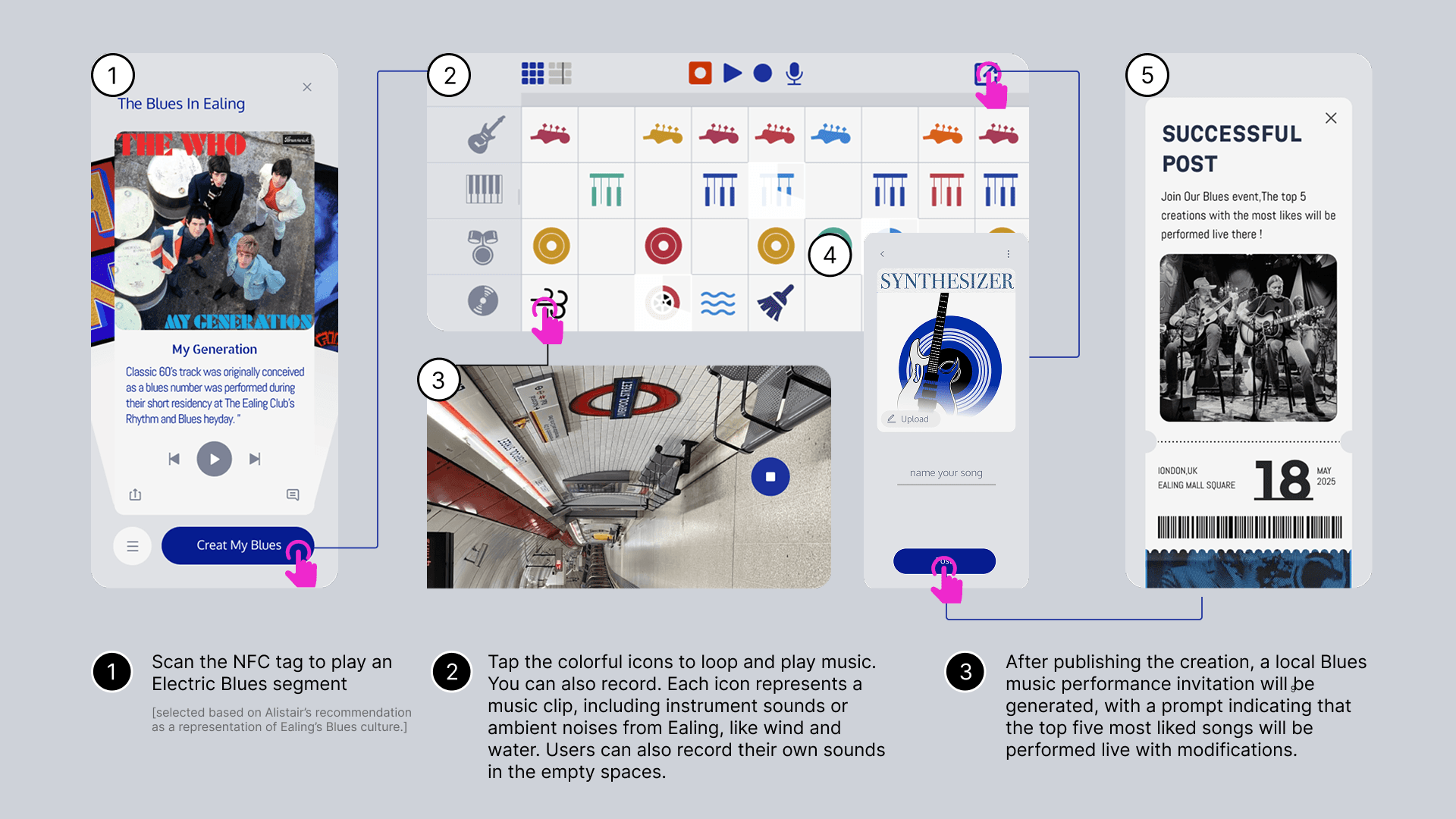
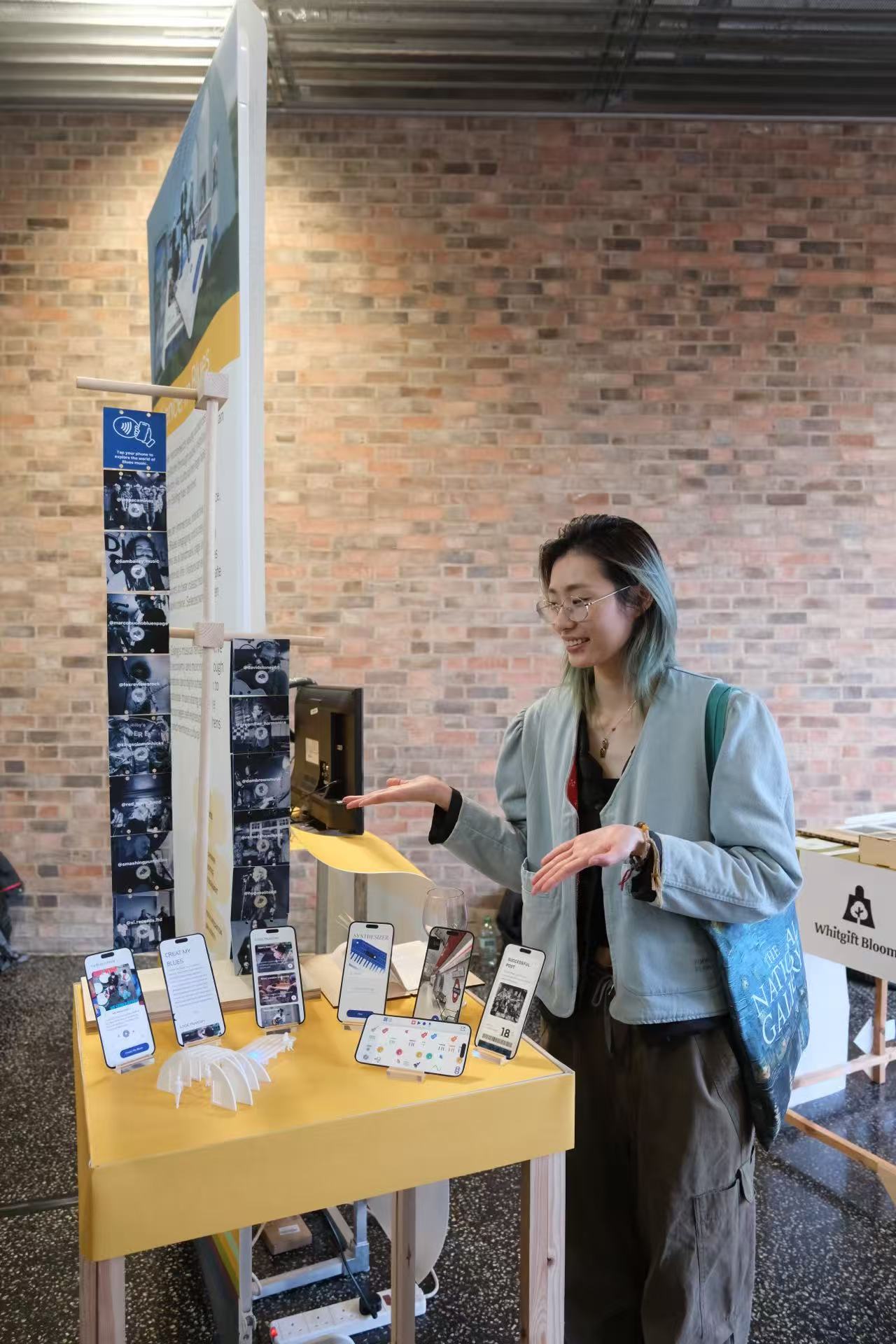
We designed a community-driven system that integrates interactive installations with online music co-creation, enabling local senior musicians to collaborate with young people.
The system fosters intergenerational dialogue and revitalizes Ealing’s blues culture through participatory music experiences.

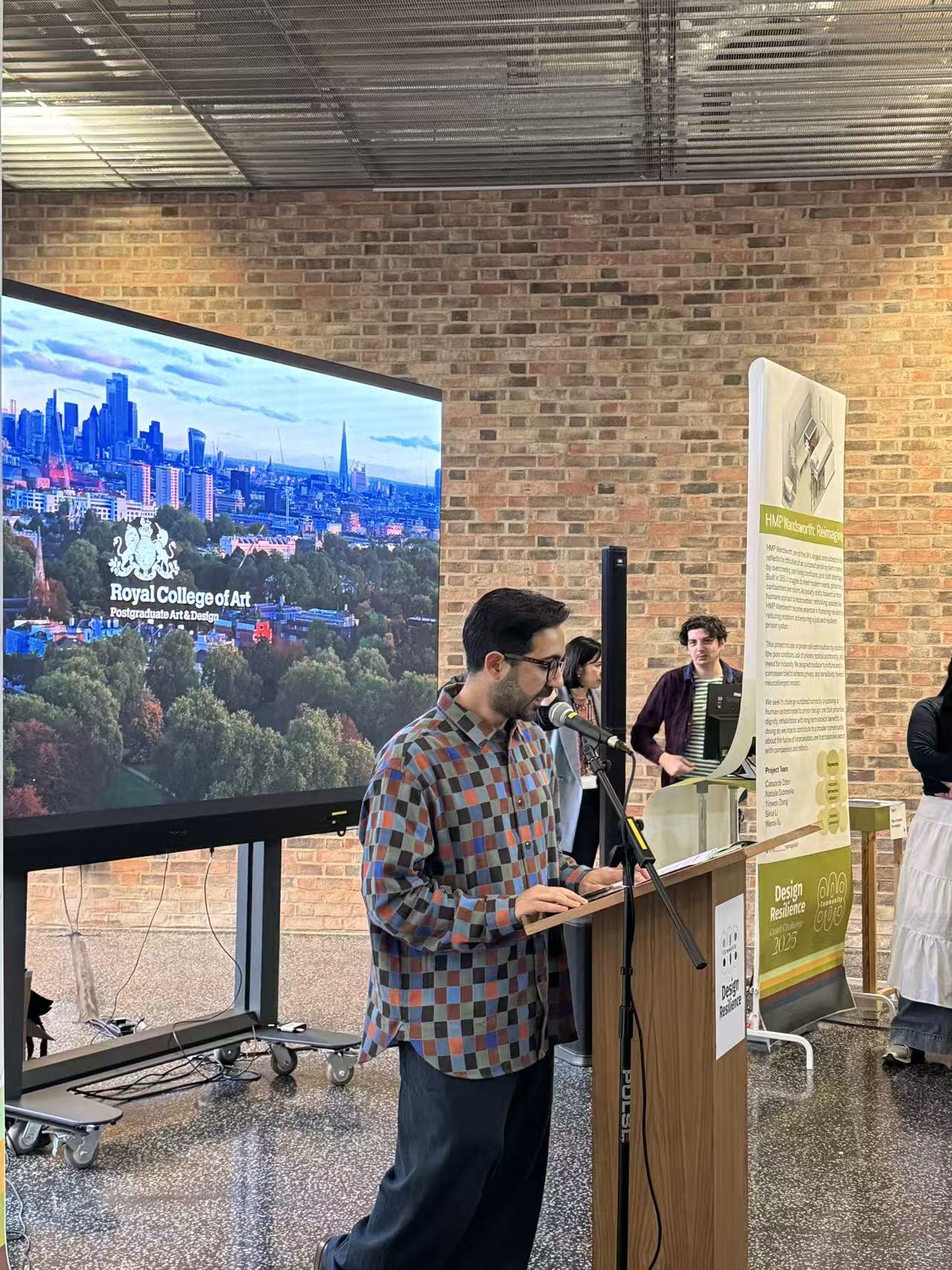
The project was shortlisted for the RCA Grand Challenge Award and showcased in the final exhibition.


Stage 2 — Extending Local Engagement

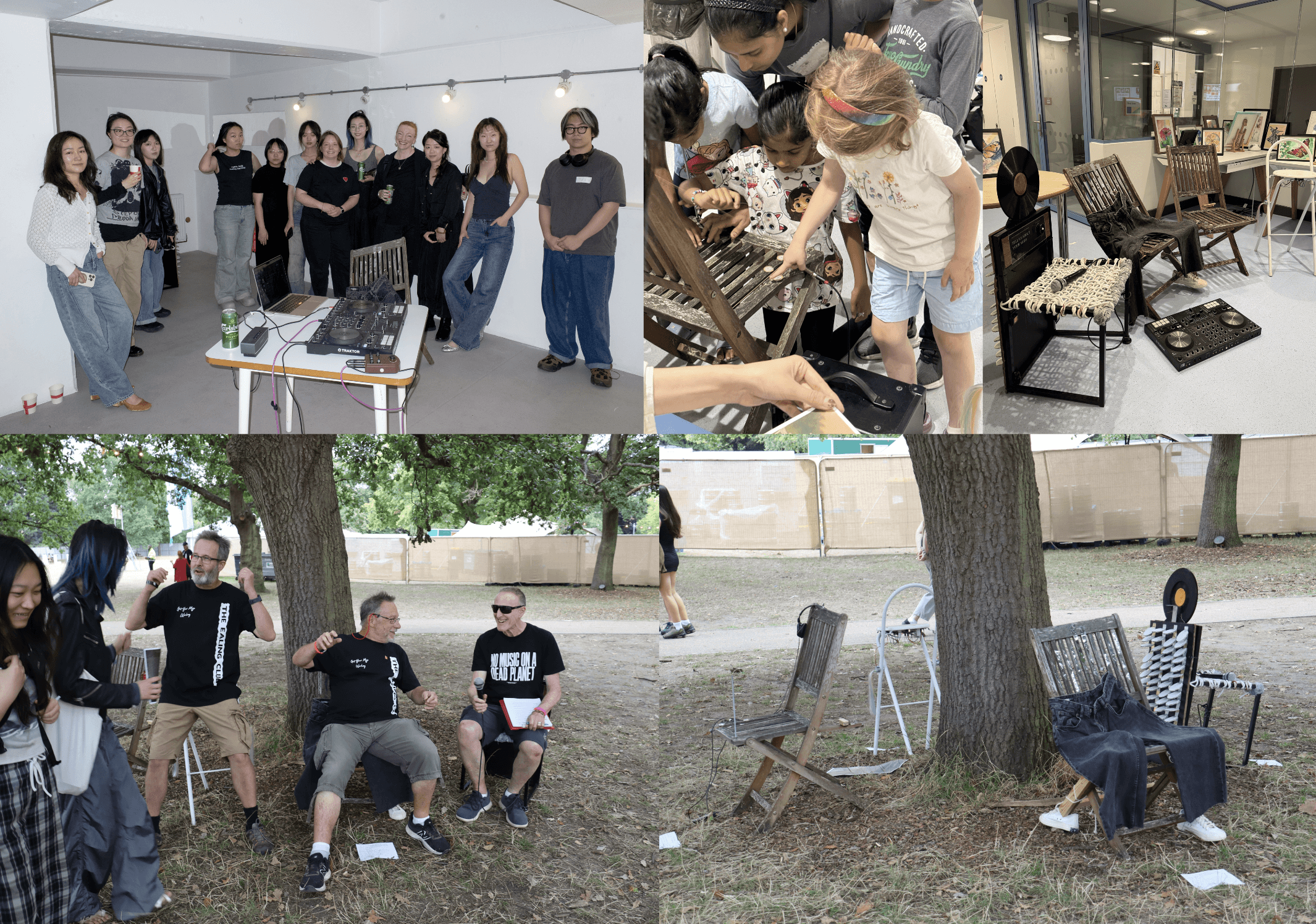
Building on the initial concept, we introduced a “Memory Chair” initiative, inviting artists to narrate the stories of Ealing Blues through creative chair installations.
This intervention sparked curiosity among local residents and reconnected the community with its musical heritage.

The project was later exhibited at multiple venues, including the Ealing Blues Festival, Peckham Museum, and Southall Community Centre, and was featured by Occhi Magazine , gaining broader recognition within the local arts scene.

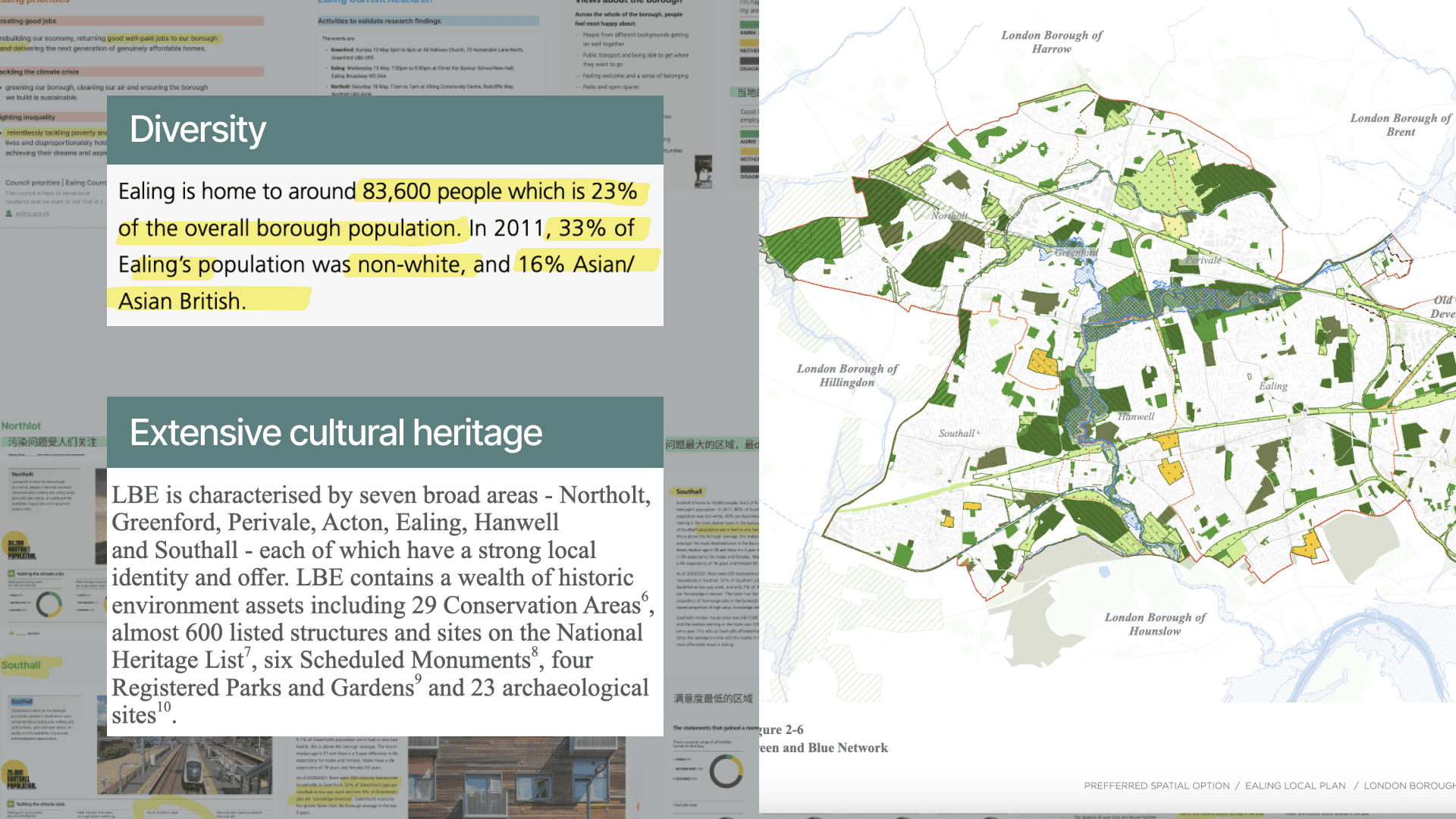
Ealing is a highly diverse borough in West London, with around 48% of residents born outside the UK and communities from over 170 countries, reflecting strong ethnic and cultural diversity Ealing ModernGov.

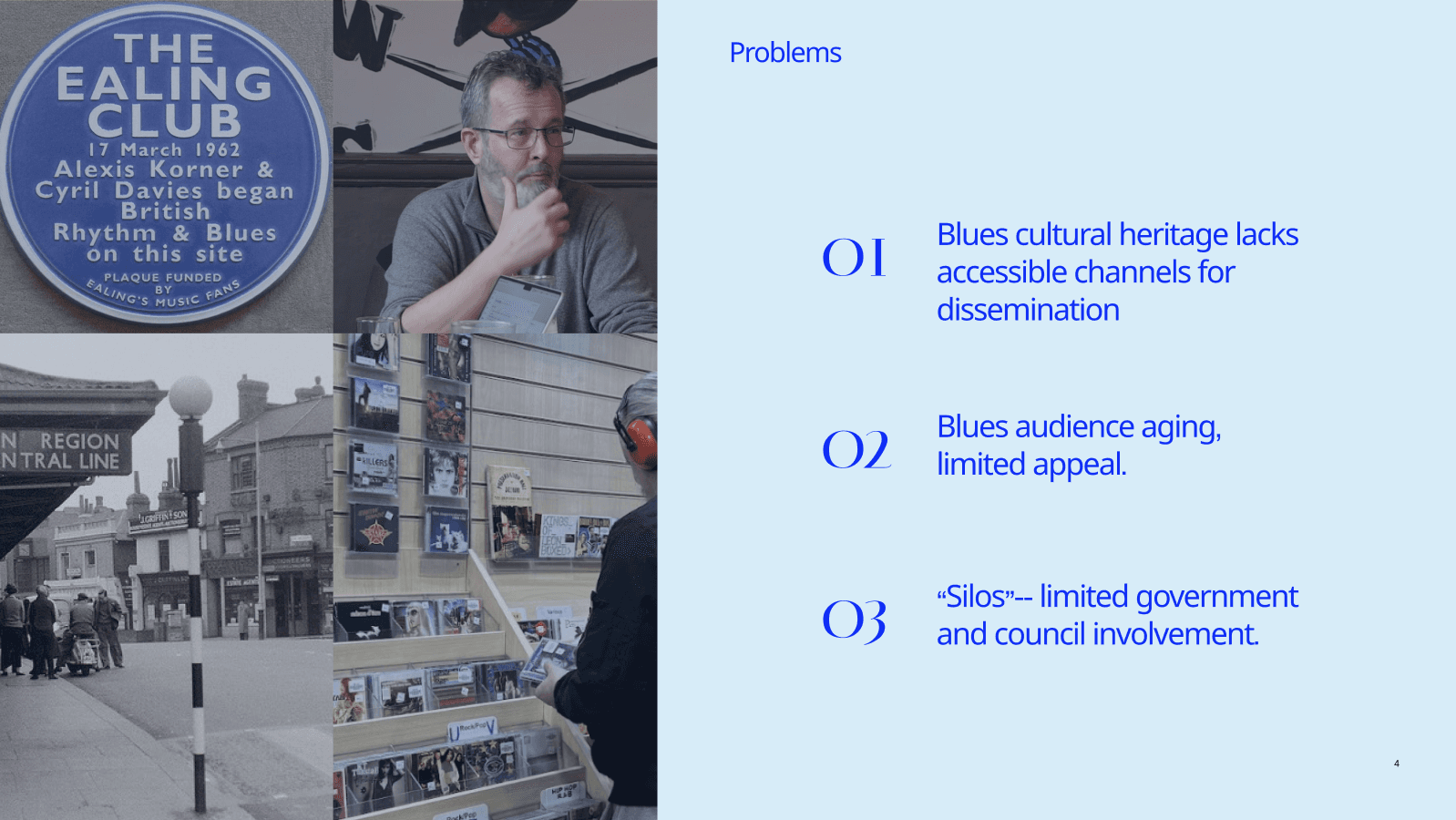
It also holds a significant place in British cultural history. In the 1950s–60s, venues such as THE EALING CLUB and Ealing Jazz Club played a key role in the development of British blues and R&B, hosting artists who later shaped UK popular music.

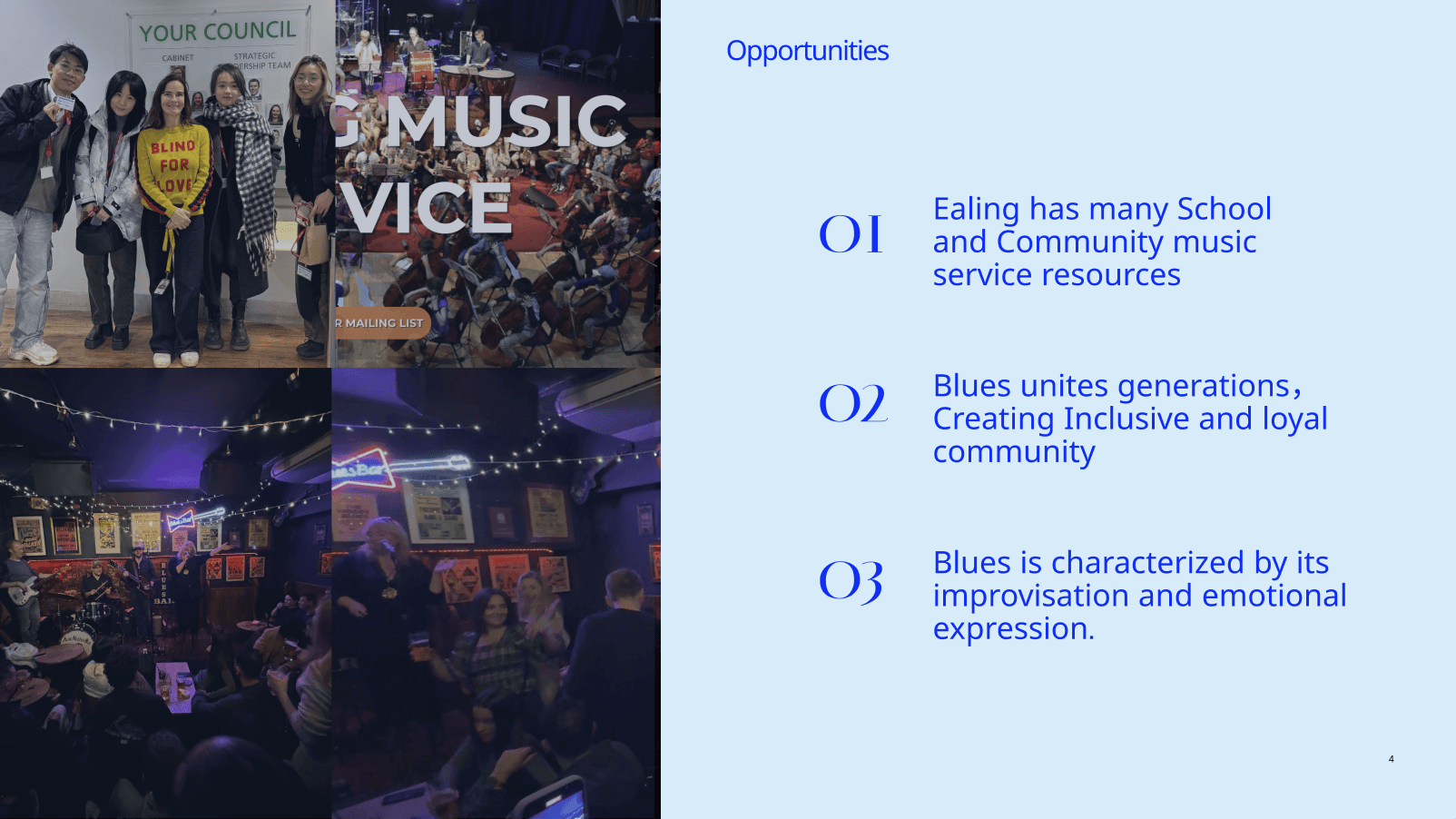
However, many of these historic music venues no longer exist. Based on field research and interviews with over 20 local citizens and stakeholders, we found that Ealing’s blues heritage is mainly preserved among older residents, while younger generations have limited awareness of this local cultural history.

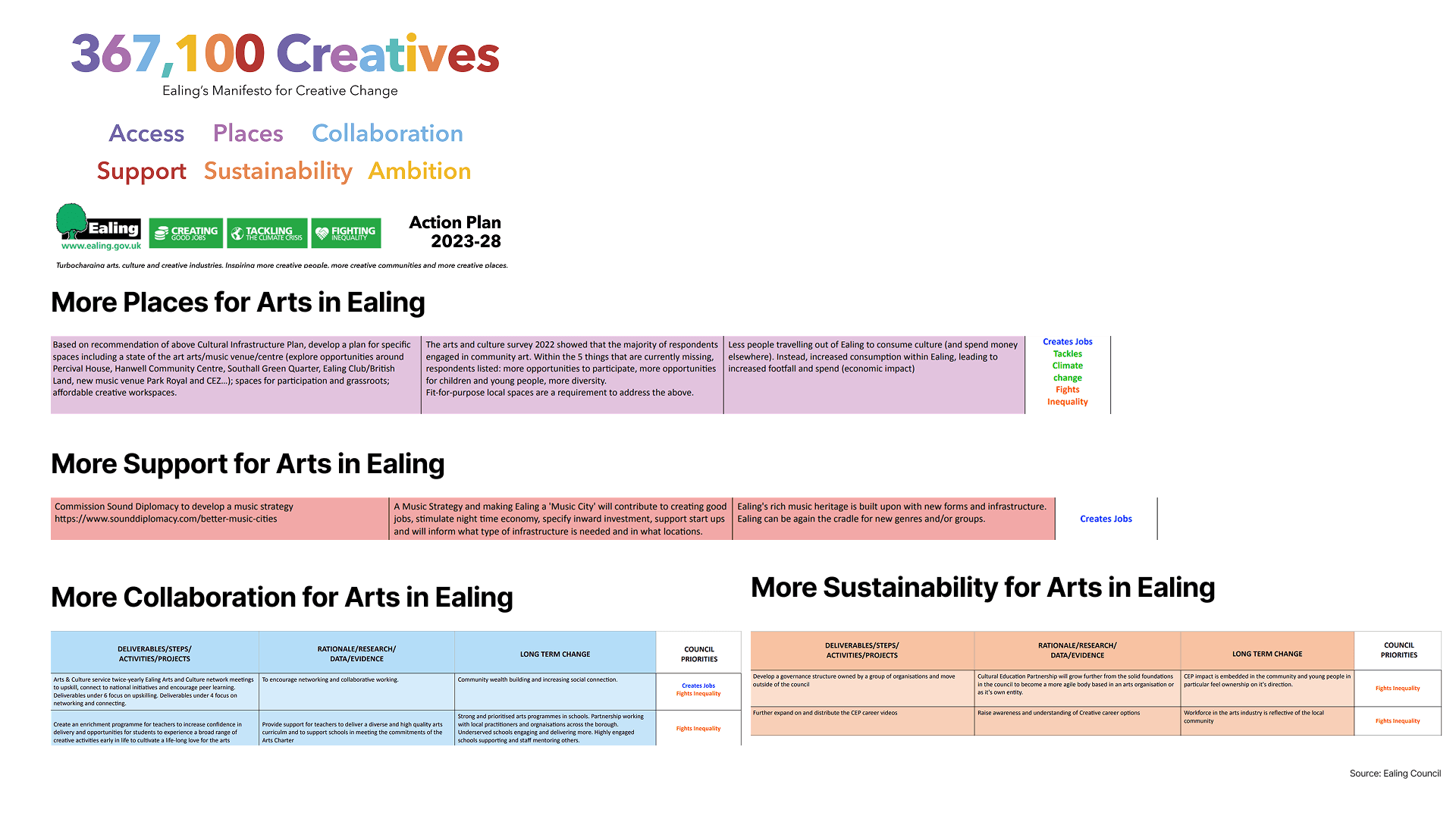
At the policy level, Ealing Council has embedded culture and creativity into its development strategy through the Cultural Manifesto & Action Plan (2023–28), investing in cultural infrastructure and community initiatives to strengthen social cohesion and local vitality. This indicates a clear alignment between the project and local cultural policy direction.

Ealing 位于伦敦西部,是一个高度多元化的行政区:截至 2011 年,约 48% 的常住人口出生于英国境外,居住者来源超过 170 个国家/地区,体现出显著的族裔与文化多样性 Ealing ModernGov

Ealing 在伦敦的文化版图中占有特殊位置——20 世纪 50–60 年代,Ealing 的音乐场所(如 Ealing Club / Ealing Jazz Club)是英国本土布鲁斯与 R&B 发展的关键节点,许多后来影响英国流行音乐的艺人和乐队曾在此演出THE EALING CLUB

随着城市变迁,许多与布鲁斯相关的历史场所已不复存在;在我们的实地调研访谈20多名citizen、以及组织机构人员,发现关于 Ealing 布鲁斯记忆主要保存在年长一代居民中,年轻居民对本地布鲁斯历史的认知较为有限(基于项目一线访谈)。

在政策层面,Ealing Council 已将文化与创意纳入近期发展议程,发布了 Cultural Manifesto & Action Plan (2023–28),并通过文化基础设施规划与节庆活动等举措加大对本地艺术与社区项目的投入,旨在通过文化激活提升社区凝聚力与经济活力。该政策背景表明本项目与地方政府的文化策略存在明显的契合点。


Ealing is a highly diverse borough in West London, with around 48% of residents born outside the UK and communities from over 170 countries, reflecting strong ethnic and cultural diversity Ealing ModernGov.

It also holds a significant place in British cultural history. In the 1950s–60s, venues such as THE EALING CLUB and Ealing Jazz Club played a key role in the development of British blues and R&B, hosting artists who later shaped UK popular music.

However, many of these historic music venues no longer exist. Based on field research and interviews with over 20 local citizens and stakeholders, we found that Ealing’s blues heritage is mainly preserved among older residents, while younger generations have limited awareness of this local cultural history.

At the policy level, Ealing Council has embedded culture and creativity into its development strategy through the Cultural Manifesto & Action Plan (2023–28), investing in cultural infrastructure and community initiatives to strengthen social cohesion and local vitality. This indicates a clear alignment between the project and local cultural policy direction.

Ealing’s cultural heritage exists, but is no longer collectively remembered or experienced by the community.

Step 1:研究方法(保留,但更清晰)

研究方法

  • 半结构化访谈:32 位 Ealing 居民(分年龄段:18-25 岁 / 40-60 岁 / 60+ 岁) + 本地音乐人

  • 2 场 Co-Design 工作坊(与社区中心合作)

  • 政策与历史文献调研(Ealing Council 文化报告、Blues 历史档案)

  • 实地走访:已关闭的 Blues 俱乐部原址、现存音乐场所

Ealing 位于伦敦西部,是一个高度多元化的行政区:截至 2011 年,约 48% 的常住人口出生于英国境外,居住者来源超过 170 个国家/地区,体现出显著的族裔与文化多样性 Ealing ModernGov

Ealing 在伦敦的文化版图中占有特殊位置——20 世纪 50–60 年代,Ealing 的音乐场所(如 Ealing Club / Ealing Jazz Club)是英国本土布鲁斯与 R&B 发展的关键节点,许多后来影响英国流行音乐的艺人和乐队曾在此演出THE EALING CLUB

随着城市变迁,许多与布鲁斯相关的历史场所已不复存在;在我们的实地调研访谈20多名citizen、以及组织机构人员,发现关于 Ealing 布鲁斯记忆主要保存在年长一代居民中,年轻居民对本地布鲁斯历史的认知较为有限(基于项目一线访谈)。

在政策层面,Ealing Council 已将文化与创意纳入近期发展议程,发布了 Cultural Manifesto & Action Plan (2023–28),并通过文化基础设施规划与节庆活动等举措加大对本地艺术与社区项目的投入,旨在通过文化激活提升社区凝聚力与经济活力。该政策背景表明本项目与地方政府的文化策略存在明显的契合点。


Ealing is a highly diverse borough in West London, with around 48% of residents born outside the UK and communities from over 170 countries, reflecting strong ethnic and cultural diversity Ealing ModernGov.

It also holds a significant place in British cultural history. In the 1950s–60s, venues such as THE EALING CLUB and Ealing Jazz Club played a key role in the development of British blues and R&B, hosting artists who later shaped UK popular music.

However, many of these historic music venues no longer exist. Based on field research and interviews with over 20 local citizens and stakeholders, we found that Ealing’s blues heritage is mainly preserved among older residents, while younger generations have limited awareness of this local cultural history.

At the policy level, Ealing Council has embedded culture and creativity into its development strategy through the Cultural Manifesto & Action Plan (2023–28), investing in cultural infrastructure and community initiatives to strengthen social cohesion and local vitality. This indicates a clear alignment between the project and local cultural policy direction.

32

CItizen and musicians

2

Co-Design Sessions

3

Organizations

Key Findings

Blues are suit for self-expression :electric Blues is a powerful tool for

self-expression and can serve as a shared language for local residents.

Invisible to younger generations: Electric Blues having limited

presence on mainstream platforms like social media and streaming services,

the genre has become increasingly invisible to younger generations.

Older musicians have deep knowledge of electric Blues but lack accessible

ways—beyond festivals or record shops—to connect with younger audiences.

Outdated and ineffective promotional methods:.Ealing boasts rich cultural sites tied to Electric Blues and rock, yet their

potential remains untapped due to a lack of attention, activation, and outdated

methods of promotion.
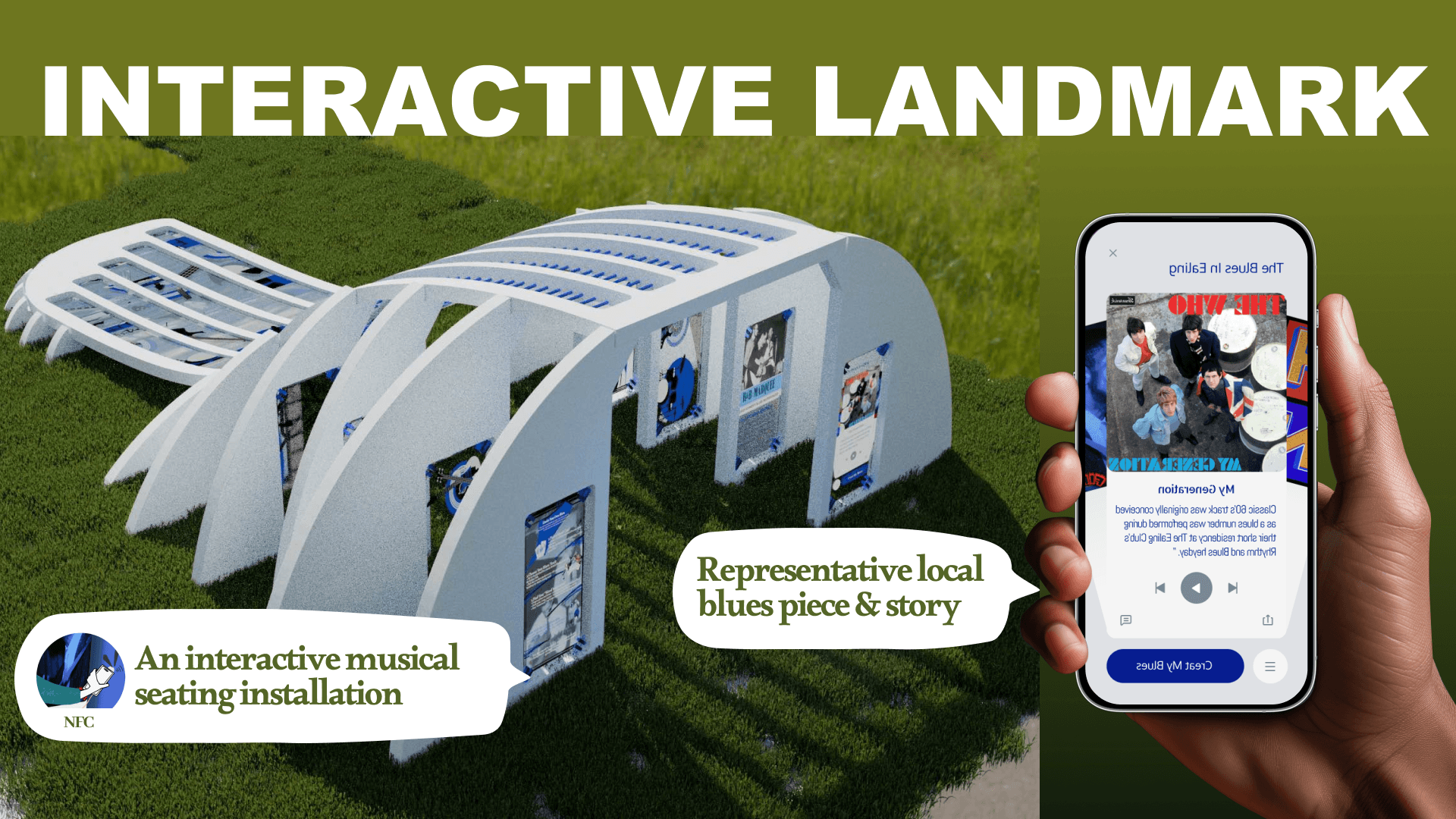
We designed a low-barrier community activation system to reactivate Ealing’s blues heritage through lightweight interaction and co-creation mechanisms.
After the project ended, we began to reflect more deeply. We realized that without sufficient funding, our initial proposal would be difficult to implement. This led us to reconsider:If we wanted to create visible, tangible impact with limited resources, could we intervene in a more lightweight and accessible way?

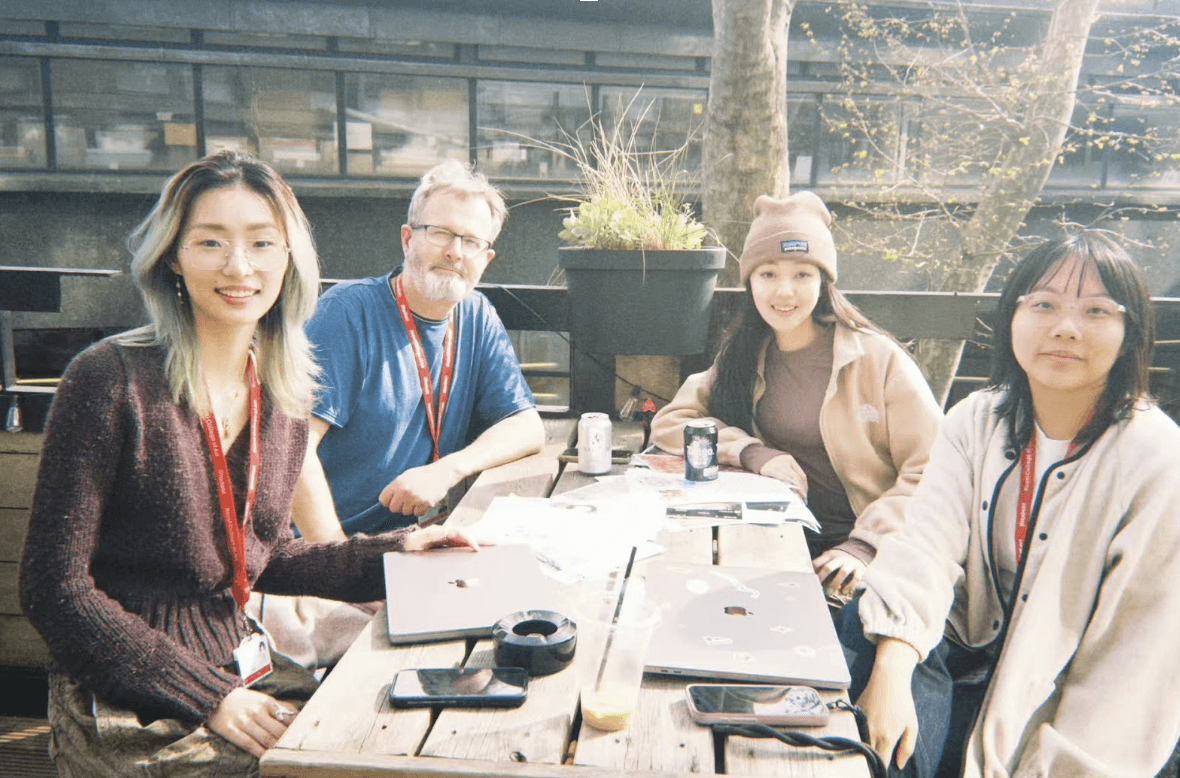
A visit to a local exhibition sparked a new idea:What if we curated an open-call exhibition inviting artists to explore and revive the story of Ealing Blues?  This approach allowed us to bypass heavy logistics and directly leverage our
most valuable asset — the creative network we already belonged to.

We drafted several concept proposals and arranged a discussion with Alistair Young. Eventually, we decided to focus on one culturally symbolic object in the UK: the memorial bench.

Memorial benches are a unique part of British public culture. Donated by loved ones in memory of someone who has passed, these benches carry engraved plaques that tell personal stories. Many legendary musicians even have their own benches. These aren't just seats — they are vessels of memory, emotional connection, and urban identity.

We wanted to build on this idea by designing an interactive public experience that invites people to sit down, reflect, and reconnect with the spirit of Blues. While the genre may feel like a thing of the past, its soulful essence — freedom, authenticity, and emotional expression — remains timelessly relevant.

In the end, we concluded that the most feasible and impactful approach was to deliver the project in a simple, accessible way—activating artists and using a memorial bench as the medium to narrate the story of Ealing Blues, inviting the community to interact and feel its spirit.

Outcome 2- Seated in the sound

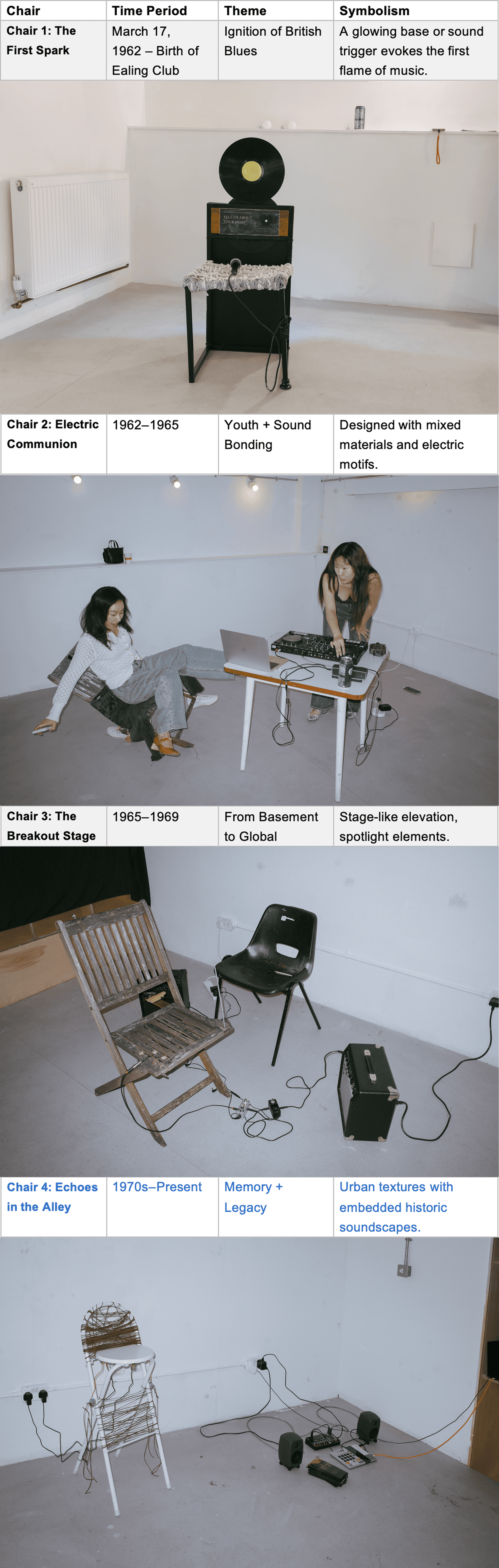
We propose a mobile, interactive sound-art installation for the Ealing Blues Festival titled "Seated in the sound : Music Meets Migration." Inspired by Ealing’s iconic role in British blues history, this project maps the evolution of blues music through a series of uniquely designed “music chairs.” Each chair is not only a historical symbol but also a participatory sonic object, celebrating the cultural layers of Ealing’s migrant communities, youth identity, and sound memories.
Result and reflection

Through the implementation of the Ealing Blues project, I experienced the inherent tension between an imaginative vision and the friction of reality. This journey taught me a humbling lesson: the power of design is limited if it exists in a vacuum. We must design for organizations, rather than for the sake of design itself. If given the opportunity to iterate, I would pivot from external intervention to internal empowerment—deeply embedding within the Ealing Club to help them activate their inherent assets. The goal is to transform them into a self-sustaining, innovative organism; only then can the impact of design be truly regenerative and continuous.

Furthermore, I have refined my understanding of cross-organizational orchestration. While our initial ambition to align the Ealing Council, Blues organizations, and schools in a co-creation ecosystem was visionary, it also revealed a certain naivety regarding the complexities of funding and inter-organizational incentives. I now realize that sustainable change begins with uncovering the latent value within a single focal point—the Ealing Club—to solve internal problems that offer long-term ripple effects.

The final, and perhaps most vital, lesson is the 'Power of Simplicity.' I’ve learned that the more elegant and low-cost a design is, the more likely it is to be adopted in the messy reality of daily life. I once feared that 'simple' meant 'under-designed,' but I now understand that minimizing implementation costs and maximizing resource mobilization is the ultimate form of design sophistication. True design impact is measured not by its complexity, but by its ability to live and breathe within the constraints of the real world.
More info

Research

workshop

workshop

Videos